
Quick Answer
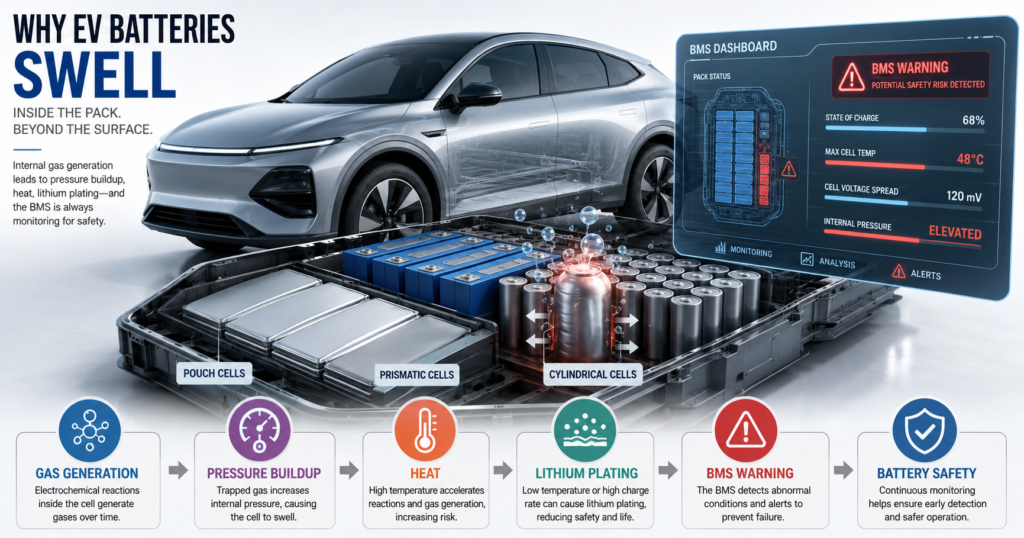
EV battery swelling can sound alarming, especially if you have seen a swollen phone or laptop battery before. In an electric vehicle, swelling usually points to gas generation, pressure buildup, or abnormal stress inside lithium-ion cells. In simple terms, swelling means something inside the cell is no longer behaving normally. The most common reason is gas generation from unwanted chemical reactions involving the electrolyte, electrodes, or interfacial layers inside the battery. In pouch cells, that gas can physically expand the flexible cell casing. In prismatic and cylindrical cells, the swelling may be less visible from the outside, but internal pressure can still increase.
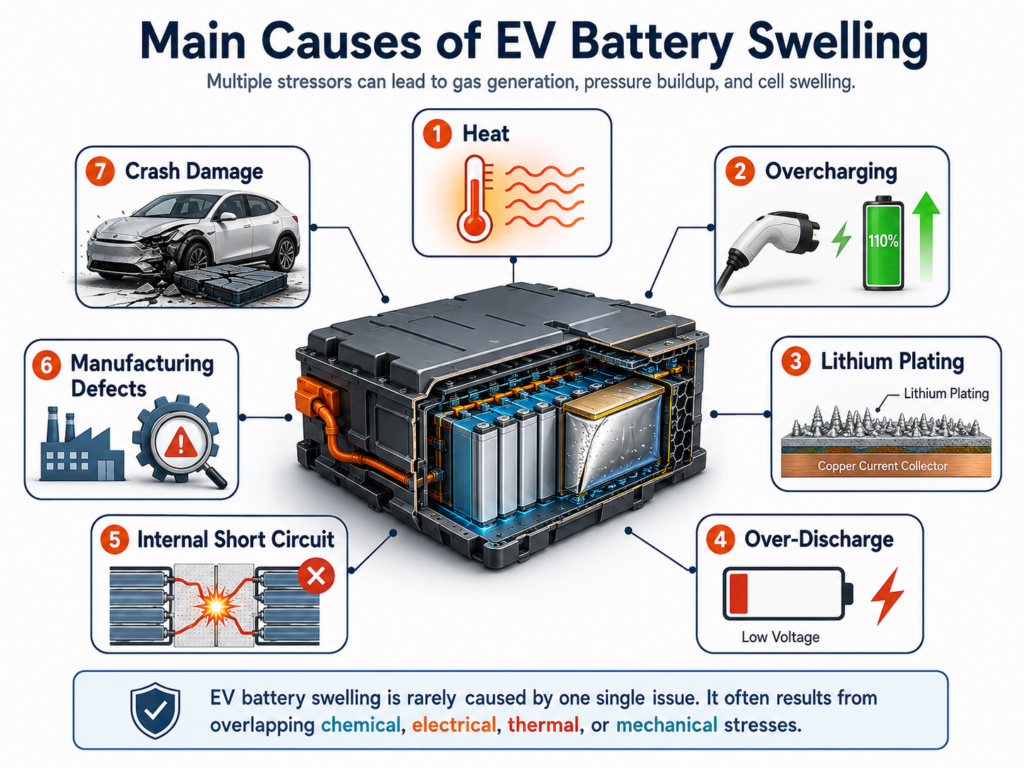
A swollen EV battery does not automatically mean the vehicle is about to catch fire. But it should never be ignored. Swelling can be linked to overheating, overcharging, lithium plating, electrolyte breakdown, internal short circuits, poor manufacturing quality, physical damage, or long-term degradation.
For EV owners, the important point is practical: if your vehicle shows battery warnings, unusual range loss, charging problems, strange smells, smoke, hissing, deformation near the battery area, or post-crash battery damage, stop guessing and contact the automaker, dealer, or a qualified EV technician.
Introduction: Battery Swelling Sounds Simple, But It Is Not
Most EV battery problems are invisible to the driver. You do not see lithium ions moving between electrodes. You do not see electrolyte aging. You do not see the solid electrolyte interphase, lithium plating, separator damage, or microscopic particle cracking. From the driver’s seat, the battery usually looks like a percentage on a screen.
That is why battery swelling gets attention. It is one of the few battery failure symptoms people can imagine physically. Many readers have seen a swollen phone battery pushing a screen upward or a laptop trackpad bulging. So when they hear that EV batteries can swell, the natural reaction is concern.
The truth is more nuanced. An EV battery pack is not just a giant phone battery. It is a large engineered system with hundreds or thousands of cells, thermal management, sensors, fuses, contactors, venting paths, pack enclosures, crash structures, software limits, and a battery management system. In many cases, the driver will never visually see a swollen cell because the pack is sealed under the vehicle floor.
But the basic chemistry is still related. Most EVs use lithium-ion cells. Those cells contain active materials, electrolyte, separators, current collectors, and sealed enclosures. When unwanted reactions occur inside the cell, gas can form. When that gas has nowhere to go, internal pressure rises. Depending on the cell format, that pressure may show up as visible swelling, increased stack force, cell deformation, venting, or pack-level stress. This is why swelling is not just a cosmetic issue. It is a clue. Sometimes it points to normal lifetime expansion that engineers already planned for. Other times, it points to a serious safety problem. To understand the difference, we need to look inside the cell.
What EV Battery Swelling Actually Means
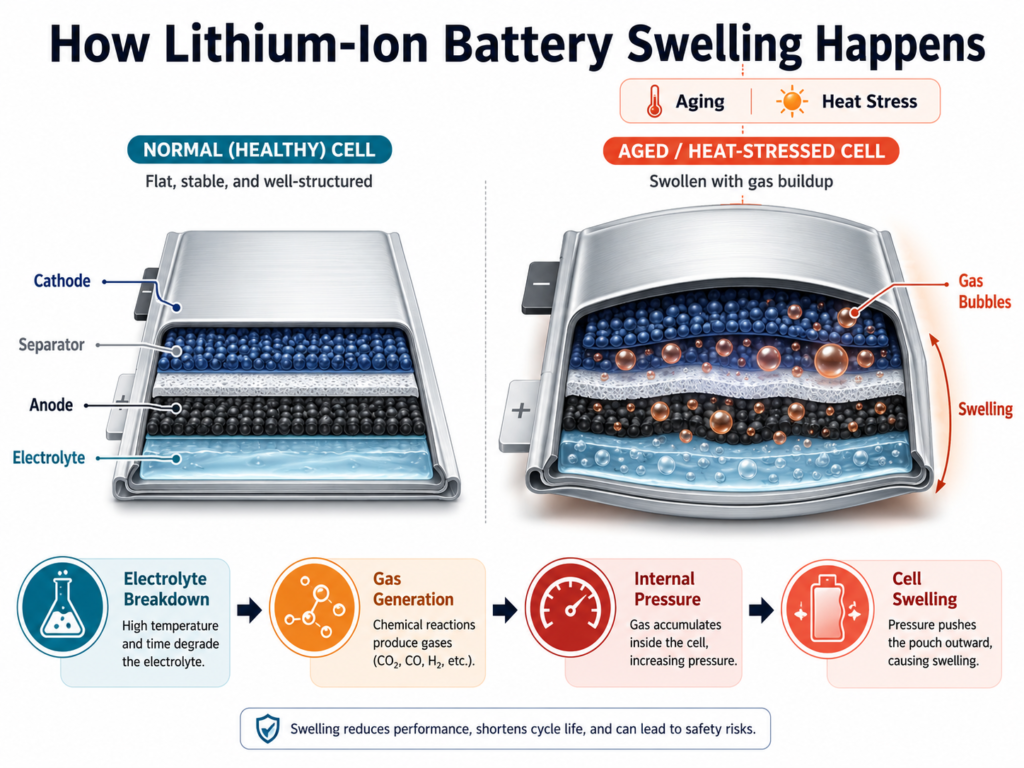
Battery swelling means a cell or battery pack has physically expanded beyond its expected shape or pressure range. That expansion can come from two related effects. The first is gas generation. This is the classic “battery bloating” problem. Chemical and electrochemical reactions inside the cell generate gases such as carbon dioxide, carbon monoxide, hydrogen, methane, ethylene, or other volatile compounds, depending on chemistry and conditions. In a flexible pouch cell, the cell can visibly puff up. In a rigid cell, internal pressure may rise until the cell vents or the structure deforms.
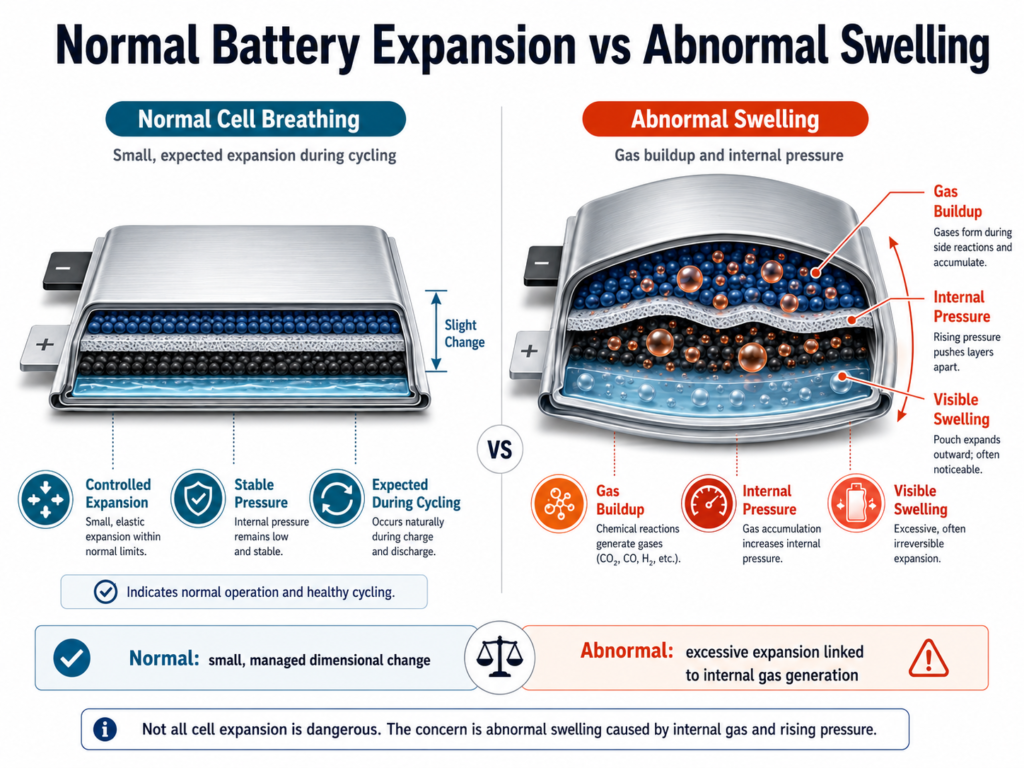
The second is electrode expansion. Battery materials expand and contract slightly as lithium moves in and out during charging and discharging. Graphite anodes, silicon-containing anodes, and some cathode materials can change volume during cycling. Small expansion is normal and expected. But repeated mechanical breathing, aging, gas buildup, and internal stress can gradually change cell thickness, pressure distribution, and contact between layers.
This is especially important in modern EV packs because automakers are trying to pack more energy into less space. A battery pack is not an empty box with plenty of room for cells to grow. It is a tightly engineered structure. Cooling plates, compression pads, module frames, adhesives, busbars, sensors, and pack covers all compete for space. That is why battery swelling is not only a cell chemistry topic. It is also a mechanical design topic.
For more background on this pack-level side, see our related guide: EV Battery Pressure Management: Why Compression and Swelling Matter.
Why Lithium-Ion Batteries Generate Gas
Inside a lithium-ion cell, the electrolyte allows lithium ions to move between the anode and cathode. The electrolyte is necessary for performance, but it is also chemically sensitive. It has to survive high voltage, low voltage, heat, repeated cycling, and contact with reactive electrode surfaces. When the electrolyte or surface layers break down, gas can form.
A useful external reference is the Frontiers paper How Gas Generates in Pouch Cells and Affects Consumer Products. Although the paper focuses heavily on consumer electronics, the underlying pouch-cell swelling mechanisms are relevant to lithium-ion batteries more broadly. The authors explain that pouch cell swelling is mainly caused by gas generation from electrochemical and chemical reactions inside the cell, and that swelling can create safety concerns if flammable or toxic gases are released.
A more recent technical review, Gas Generation in Lithium-Ion Batteries: Mechanisms, Failure Pathways, and Thermal Safety Implications, published in 2025, goes deeper. It explains that gas generation can damage cycle life and thermal stability because gas formation consumes electrolyte and active lithium, blocks ion transport paths, increases polarization, and can contribute to localized heating.
This is the hidden problem with swelling. The gas is not just sitting there doing nothing. It is often a symptom of chemistry that is already degrading the cell.
Formation Gas vs Abnormal Gas: Not All Gas Means the Same Thing
Here is a detail that often gets missed: lithium-ion cells can generate gas even during normal manufacturing. During battery production, cells go through a process called formation cycling. This is the carefully controlled first charging and discharging process that helps build the protective interfacial layers inside the cell, especially the solid electrolyte interphase, or SEI, on the anode. Some gas generation during this stage is expected.
Manufacturers usually manage this with degassing steps, especially for pouch cells. The goal is to create a stable cell before it ever reaches a vehicle. The problem starts when gas generation continues later in the battery’s life at a rate the cell and pack were not designed to tolerate. That can happen because of poor formation quality, contamination, high-temperature storage, overcharging, deep over-discharge, repeated high-current operation, lithium plating, internal short circuits, or mechanical damage.
This distinction matters because a small amount of engineered expansion is not the same as a dangerous swollen battery. EV battery packs are designed with some allowance for pressure changes, aging, and cell breathing. But unexpected swelling is different. It means the cell may be operating outside its safe or intended range.
For readers interested in the manufacturing side, see our article: EV Battery Formation: The Most Expensive Step in Manufacturing.
The Main Causes of EV Battery Swelling
1. Heat and Electrolyte Breakdown
Heat is one of the biggest enemies of lithium-ion batteries. It accelerates unwanted reactions almost everywhere inside the cell. When a battery spends too much time at high temperature, the electrolyte can decompose more quickly. The SEI layer can grow or become unstable. Cathode surfaces can become more reactive. Internal resistance can rise. Gas generation may increase.
This does not mean every EV in a hot climate is in danger. Modern EVs use thermal management systems to keep battery temperature within safe limits. But heat still matters, especially when combined with high state of charge, repeated DC fast charging, aggressive driving, or poor cooling.
A battery parked at 100% state of charge in extreme heat is under more chemical stress than the same battery parked at a moderate state of charge in mild weather. Over years, that difference can affect degradation. In rare or severe cases, the same stressors that accelerate aging can also contribute to swelling.
This is one reason automakers spend so much effort on battery cooling plates, coolant loops, chillers, heat pumps, temperature sensors, and software-based charging limits. For more on how temperature control affects charging performance, see our guide to EV battery preconditioning and winter fast charging.
Related internal article: EV Battery Preconditioning: Why Fast Charging Slows in Winter (2026)
2. Overcharging and High-Voltage Stress
Lithium-ion cells are designed to operate within specific voltage limits. When a cell is pushed too high, unwanted oxidation reactions become more likely. The electrolyte and cathode surface can become unstable. Gas generation can increase. In a modern EV, true overcharging is uncommon because the BMS monitors cell voltages and limits charging. The vehicle also protects the driver from using the absolute full chemical capacity of the battery. The 100% shown on the dashboard is not always the same as the cell’s true electrochemical maximum.
Still, high-voltage stress is real. Frequently charging to 100% and letting the vehicle sit there for long periods can increase calendar aging, especially for nickel-rich chemistries. This is usually a degradation concern before it is a swelling concern, but the underlying chemistry is connected. This is why many EV manufacturers recommend daily charging limits below 100% for some battery types, unless the driver needs the full range for a trip. LFP batteries are often treated differently because their voltage behavior and calibration needs differ, but even then, the vehicle manual should guide the owner.
Tesla’s owner information, for example, emphasizes that the high-voltage battery is managed by sophisticated systems and gives specific guidance on keeping the vehicle plugged in when not in use, especially during long periods of storage: Tesla Model Y High Voltage Battery Information.
The broader point is simple: the BMS is there for a reason. Let the vehicle manage the battery. Avoid trying to “hack” charging behavior with unsupported equipment or repeated operating conditions outside the manufacturer’s recommendations.
3. Lithium Plating During Fast Charging
Lithium plating is one of the most important causes of battery stress during fast charging. During normal charging, lithium ions move into the graphite anode. But under difficult conditions, some lithium can deposit as metallic lithium on the anode surface instead of inserting properly. This is more likely during high charging current, low battery temperature, high state of charge, or when the anode is already degraded.
Lithium plating matters because it can cause capacity loss, increase resistance, create uneven current distribution, and in severe cases contribute to internal short circuits. It can also interact with electrolyte and surface layers in ways that promote gas generation. This is why EVs charge quickly at lower states of charge and slow down as they approach higher states of charge. The charging curve is not just about charger power. It is about protecting the cell.
If you have ever wondered why a fast charger may give excellent speed from 10% to 50% but slow dramatically after 80%, this is one of the reasons. The BMS is trying to avoid conditions where the anode becomes too stressed.
Related internal article: Can EV Batteries Really Charge in 6 Minutes?
4. Over-Discharge and Long-Term Storage at Very Low Charge
Over-discharge can also damage lithium-ion cells. If a cell voltage drops too low, copper current collectors and other internal components can become unstable. When the cell is later recharged, metallic contamination or internal defects may create serious safety risks.
In normal EV use, the BMS prevents the driver from deeply over-discharging the pack. The vehicle will shut down before the cells are driven to a truly dangerous voltage. But long-term neglect can still be a problem. If an EV is left unused for months with a very low battery, parasitic loads and self-discharge can eventually push the battery into a risky state. This is one reason owner manuals often provide storage guidance. The exact recommendation varies by vehicle, but the principle is consistent: do not abandon an EV at a near-empty state of charge for long periods.
Swelling from over-discharge is not usually the first thing an owner will notice. The more likely symptoms are failure to charge, battery warnings, reduced power, or a service message. But chemically, severe over-discharge can contribute to gas generation and internal damage.
5. Internal Short Circuits
An internal short circuit is one of the most serious battery faults. It means the positive and negative sides of the cell become electrically connected inside the cell in a way they should not. This can happen from contamination, separator damage, dendrite growth, manufacturing defects, crush damage, puncture, or severe degradation. A mild internal short may create slow self-discharge and heat. A severe internal short can create rapid heating, gas generation, swelling, venting, and thermal runaway.
This is where swelling becomes a safety warning. A swollen cell may not be in thermal runaway, but gas generation and pressure buildup can be part of the path toward a more dangerous failure.
The National Transportation Safety Board has warned that damaged EV battery cells can experience uncontrolled increases in temperature and pressure, leading to thermal runaway and possible reignition: NTSB Safety Risks to Emergency Responders from Lithium-Ion Battery Fires in Electric Vehicles.
This does not mean EV fires are common. They are not. But when high-voltage battery damage does occur, responders and technicians treat it seriously because the pack can contain stranded energy and damaged cells may not fail immediately.
Related internal article: EV Battery Crash Safety: What Really Happens After a Crash
6. Manufacturing Defects and Contamination
Most EV batteries are built under strict quality controls. But no manufacturing process is perfect. A tiny metal particle, a burr on a current collector, poor electrode coating uniformity, moisture contamination, weak sealing, defective separator material, or improper formation can create conditions for abnormal reactions later. Sometimes the defect shows up early. Sometimes it only becomes a problem after cycling, vibration, thermal stress, or fast charging. This is why battery manufacturing is so demanding. It is not enough to make a cell that works on day one. The cell must remain stable after years of heat, cold, vibration, fast charging, deep cycling, and storage.
A 2024 Journal of Power Sources study involving commercial large-format NMC-graphite pouch cells found that aging involved overlapping mechanisms including lithium loss, resistance growth, electrode expansion, gas evolution, and lithium plating under extreme cycling conditions. The study is summarized on NREL’s research page here: Lithium Loss, Resistance Growth, Electrode Expansion, Gas Evolution, and Li Plating. That kind of research is important because real EV battery aging is rarely caused by one clean mechanism. Swelling, resistance growth, capacity fade, heat generation, and self-discharge can overlap.
7. Physical Damage and Crash Events
Physical damage can also lead to swelling. A crushed battery pack, punctured cell, bent module, damaged cooling plate, or compromised enclosure can create internal short circuits or localized heating. The tricky part is that battery damage is not always obvious from outside the vehicle. After a major crash, the car may look stable, but cells inside the pack may have been mechanically stressed. That is why damaged EVs require proper inspection, isolation, towing, and storage procedures.
This is also why owners should avoid driving an EV after a significant underside impact if there are warning lights, unusual noises, coolant leaks, smoke, burning smells, or battery alerts. A trained technician needs to inspect the vehicle. Battery swelling after physical damage is not something to diagnose at home. High-voltage packs are dangerous, and damaged lithium-ion cells can behave unpredictably.
Why Pouch Cells Are More Visibly Associated With Swelling
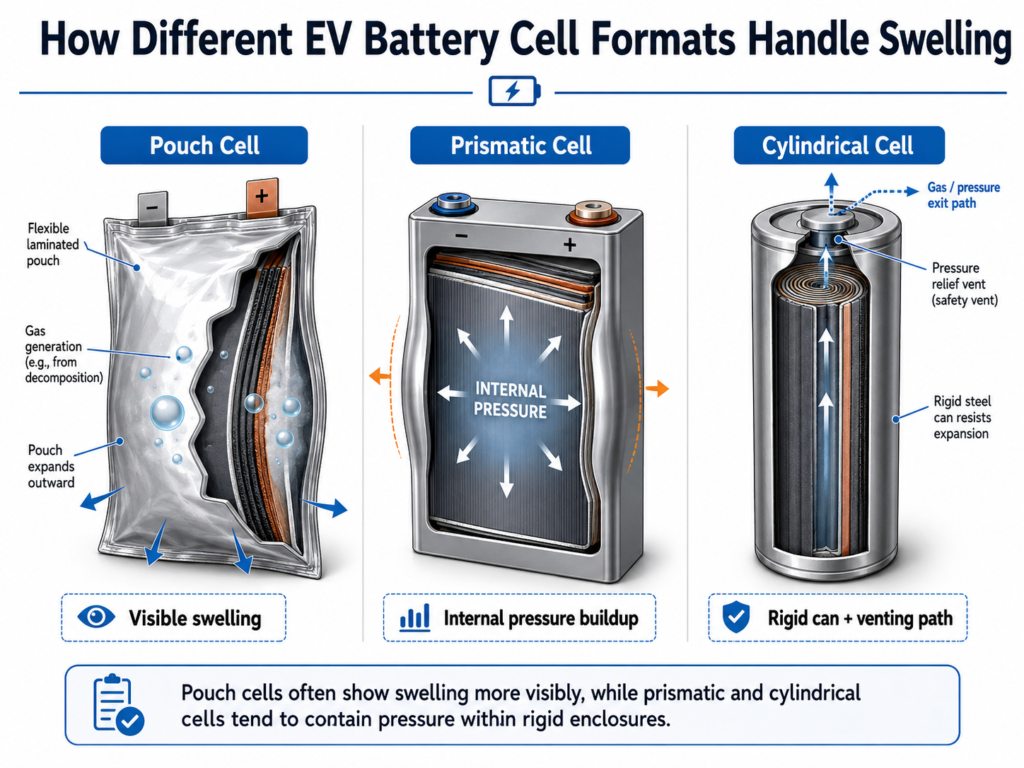
When people talk about battery swelling, they often picture pouch cells. That is because pouch cells use a flexible laminated enclosure rather than a rigid metal can. This gives them excellent packaging efficiency and low weight, but it also means they depend heavily on external support. If gas forms inside a pouch cell, the cell can visibly expand like a pillow.
Cylindrical cells are different. They use rigid metal cans. They may have vents designed to release pressure under abusive conditions. Prismatic cells also use harder enclosures, although they can still experience internal pressure and dimensional changes. This does not mean pouch cells are bad. Many EVs have used pouch cells successfully. The advantage is that they can be very space-efficient and flexible for pack design. The tradeoff is that engineers must carefully manage compression, swelling allowance, cooling contact, and module structure.
For a deeper comparison, see: Cylindrical vs Pouch vs Prismatic EV Batteries.
The important point is that swelling risk is not only about chemistry. It is about chemistry plus format plus pack design plus thermal management plus BMS strategy.
Is EV Battery Swelling Always Dangerous?
No, not all expansion is immediately dangerous. But visible or abnormal swelling should always be treated seriously. Cells can experience small dimensional changes during normal cycling and aging. Engineers expect this. Packs are designed with compression pads, tolerance spaces, pressure limits, and structural features to handle normal expansion. In that sense, some “breathing” is part of lithium-ion battery life.
But abnormal swelling is different. It may indicate excess gas generation, electrolyte decomposition, internal heat, overcharge exposure, lithium plating, contamination, or internal shorting. Once a cell has generated enough gas to deform significantly, its internal condition may be uncertain.
The danger depends on the cause, severity, chemistry, cell format, temperature, state of charge, pack design, and whether the cell continues to be charged or discharged. A swollen phone battery is easier to see. A swollen EV cell is hidden inside a sealed pack. That means the owner may only see indirect warning signs.
Warning Signs EV Owners Should Watch For
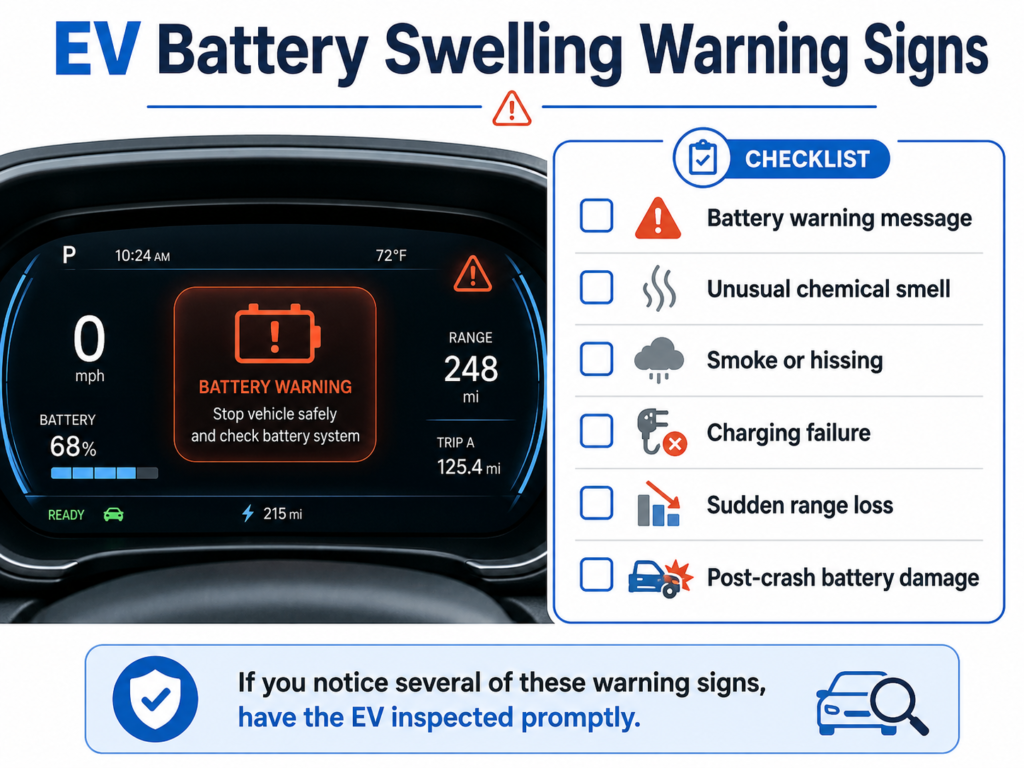
Most EV owners will never see an individual swollen cell. Instead, warning signs are more likely to appear through vehicle behavior or alerts. A possible battery problem may show up as repeated battery warnings, sudden range loss, reduced power, charging interruptions, inability to fast charge, unusual heat warnings, coolant warnings, burning or sweet chemical smells, smoke, hissing sounds, visible deformation under the vehicle, or unusual behavior after a crash.
One warning by itself does not prove swelling. For example, reduced range can come from cold weather, tire pressure, driving speed, HVAC use, battery aging, or software calibration. A charging interruption could be caused by the charger rather than the car.
But repeated battery-related warnings should not be ignored. A good rule is this: if the vehicle tells you there is a high-voltage battery problem, believe it. Do not keep fast charging repeatedly to “see if it goes away.” Do not park inside a closed garage if there is smoke, smell, hissing, or severe battery warning behavior. Do not crawl under the vehicle to inspect the pack. Contact roadside assistance, the dealer, or the automaker’s service network.
What Should You Do If You Suspect EV Battery Swelling?
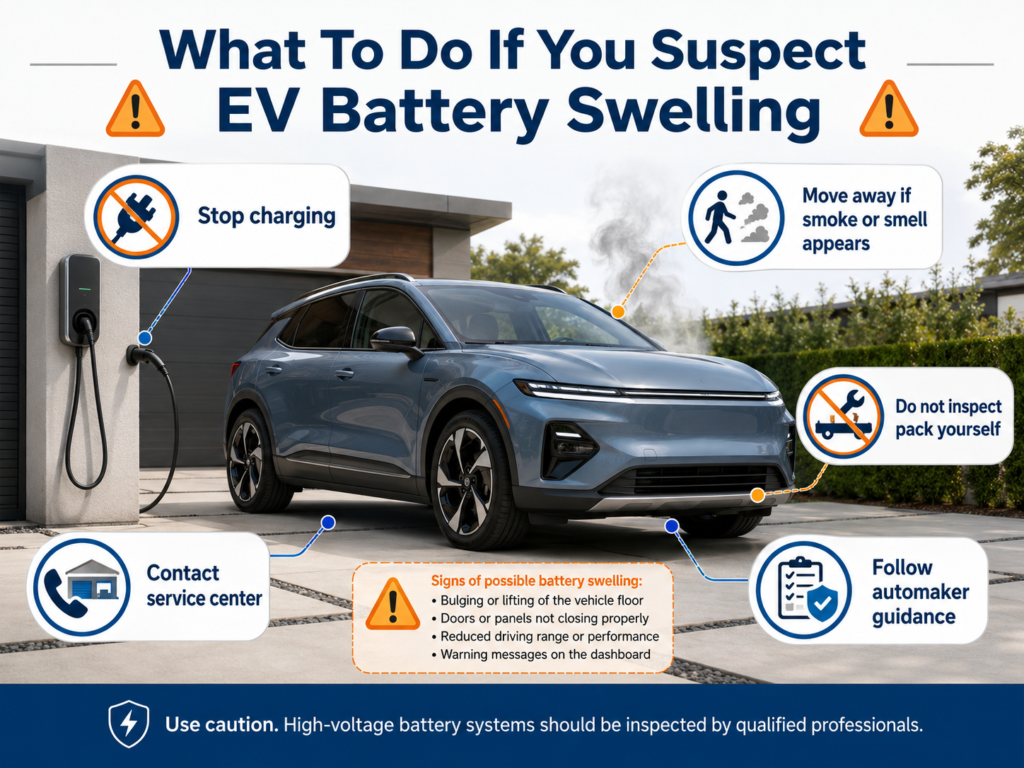
If you suspect a swollen or damaged EV battery, the right response depends on the symptoms. If the vehicle only shows a service message but drives normally, schedule service promptly and follow the vehicle’s instructions. Avoid unnecessary fast charging until the issue is diagnosed.
If you smell chemicals, see smoke, hear hissing, notice heat, or see deformation near the battery area, treat the situation as a safety issue. Move away from the vehicle and contact emergency services or roadside assistance.
If the vehicle was in a crash or hit debris underneath, do not assume the pack is fine just because the car still turns on. Battery damage can be hidden. Follow post-collision guidance from the automaker and have the vehicle inspected.
If a small consumer lithium-ion battery swells, the common advice is to stop using it and avoid puncturing it. With an EV, the stakes are higher because the pack is high-voltage and much larger. Owners should not attempt DIY battery pack inspection or repair.
Can a Swollen EV Battery Be Repaired?
Sometimes a battery pack with a localized problem can be repaired, but a severely swollen cell is usually not something technicians “fix” at the cell level. EV battery repair usually happens at the pack or module level. A service center may replace a module, repair wiring, replace sensors, fix a coolant leak, or install a remanufactured battery pack. But individual EV cells are sealed electrochemical devices. Once a cell has severe gas generation, separator damage, internal shorting, or major swelling, it is usually treated as defective.
The repairability depends heavily on pack design. A modular pack may allow replacement of a defective section. A highly integrated cell-to-pack or structural battery design may be harder to service internally. This is one reason battery repair, remanufacturing, and recycling are becoming more important as the EV fleet ages. The industry will need better diagnostics to decide when a pack can be safely repaired and when it should be recycled.
Related internal article: EV Battery Repair: Can a “Dead” Battery Be Restored Instead of Recycled?
How Automakers Reduce Swelling Risk
EV makers reduce swelling risk with several layers of protection. The first layer is cell chemistry and materials. More stable electrolytes, additives, separator coatings, cathode designs, and anode formulations can reduce unwanted reactions.
The second layer is manufacturing quality. Clean rooms, moisture control, electrode inspection, formation cycling, degassing, sealing, and end-of-line testing are critical. A small defect inside a cell can become a big problem later.
The third layer is mechanical design. Pouch cells may need compression pads and carefully controlled stack pressure. Prismatic cells need enclosure strength and swelling allowance. Cylindrical cells need proper spacing, venting paths, and thermal isolation.
The fourth layer is thermal management. Cooling plates, coolant channels, heat pumps, chillers, and temperature sensors help keep the battery inside its safe operating range.
The fifth layer is BMS software. The BMS limits voltage, current, temperature, charging speed, and power output. It watches for imbalance, abnormal voltage drops, overheating, isolation faults, and other warning signs.
The sixth layer is pack safety architecture. Fuses, contactors, crash disconnects, vent paths, fire-resistant barriers, and enclosure design help reduce risk if something does go wrong.
This layered approach is why EV battery failures are relatively uncommon compared with the number of vehicles on the road. But uncommon does not mean impossible. Battery swelling remains important because it can be an early physical sign that one or more layers of protection has been stressed.
Does Fast Charging Cause EV Batteries to Swell?
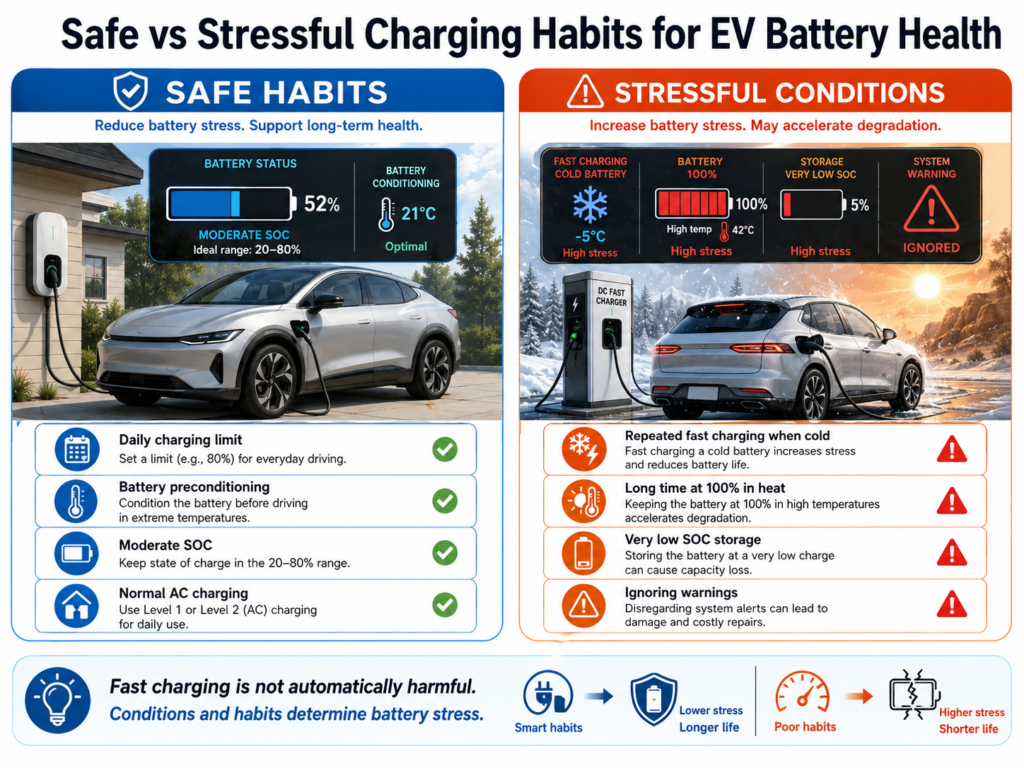
Fast charging does not automatically cause battery swelling. Modern EVs are designed to fast charge within controlled limits. But repeated high-power charging can increase stress if it happens under difficult conditions. Cold battery temperature, very high state of charge, old battery age, poor thermal control, or aggressive fast charging can increase the risk of lithium plating, heat generation, and degradation.
That is why the vehicle controls the charging curve. The charger may be capable of 350 kW, but the car decides how much power the battery can safely accept. When the battery is cold, hot, nearly full, or outside its preferred window, the BMS reduces current.
For owners, the practical advice is not to fear DC fast charging. Use it when it helps. But for daily charging, slower AC charging is usually gentler and cheaper. If you fast charge often, preconditioning the battery before arrival can help the pack reach a better temperature window.
Related internal article: Why EV Batteries Charge Slower Above 80%
Does Battery Chemistry Matter?
Yes, chemistry matters, but it does not make swelling impossible. NMC, NCA, LFP, sodium-ion, silicon-enhanced lithium-ion, semi-solid, and solid-state batteries all have different safety and degradation characteristics. LFP is often praised for thermal stability. High-nickel chemistries can offer higher energy density but require careful management. Silicon anodes can improve energy density but create more volume-change challenges. Solid-state batteries may reduce some liquid-electrolyte risks, but they still need pressure control, interface stability, and thermal management.
The key point is that no chemistry eliminates engineering tradeoffs. A battery can be safer in one way and more challenging in another. For example, silicon can store more lithium than graphite, but it also expands more. Solid-state designs may reduce flammable liquid electrolyte, but lithium-metal interfaces and stack pressure can be difficult. Sodium-ion may offer safety and cost advantages in some designs, but energy density and commercialization challenges remain. This is why the future will not be one perfect battery that solves everything. It will be a mix of chemistries, formats, and pack designs optimized for different vehicles.
Related internal article: Dual-Chemistry EV Batteries: Why One Car May Need Two Battery Types
How Battery Swelling Affects Range and Performance
Swelling itself is not what directly reduces range. The underlying degradation does. If gas generation consumes electrolyte or active lithium, the cell may lose usable capacity. If gas blocks ion pathways inside electrodes, resistance can rise. If the SEI keeps breaking and reforming, more lithium inventory is lost. If lithium plating occurs, capacity and safety margins can decline. If internal pressure changes the contact between layers, performance can become less uniform.
The driver may experience this as reduced range, slower charging, power limits, more frequent battery conditioning, or warning messages. In a large pack, one weak cell group can limit the usable performance of the whole battery because the BMS must protect the weakest part of the system. That is one reason battery diagnostics are becoming so important. A simple state-of-charge percentage is not enough. The BMS must estimate state of health, power capability, temperature distribution, cell imbalance, resistance, and fault risk.
Related internal article: EV Battery Management System Explained: How Modern EV BMS Actually Work (2026)
Practical Tips to Reduce Swelling and Degradation Risk
You cannot control everything inside your EV battery. But you can avoid the most stressful habits. For most EV owners, the best approach is simple. Use the manufacturer’s recommended daily charge limit. Avoid leaving the battery at 100% for long periods unless your vehicle manual recommends it for calibration or chemistry-specific reasons. Do not let the vehicle sit near 0% for weeks. Precondition before fast charging when possible. Avoid repeated fast charging when the battery is extremely cold. Pay attention to battery warnings. After a major crash or underside impact, get the vehicle inspected.
Also, avoid treating the EV battery like a phone battery that can be ignored until it fails. A high-voltage EV pack is a safety-critical system. If something seems wrong, professional diagnosis matters. Good battery ownership is not about babying the car. It is about staying within the operating conditions the vehicle was designed for.
Conclusion
EV battery swelling is not just a strange physical defect. It is a visible or measurable sign of internal stress. At the cell level, swelling usually comes from gas generation, electrode expansion, electrolyte breakdown, lithium plating, internal short circuits, manufacturing defects, or physical damage. At the pack level, it becomes a mechanical, thermal, and safety issue because EV batteries are tightly packaged systems with cooling plates, compression hardware, sensors, and protective structures.
For most EV owners, battery swelling will never be something they see directly. The vehicle’s BMS is designed to detect abnormal conditions long before the driver opens a battery pack. But warning signs still matter. Battery alerts, smoke, chemical smells, hissing, charging failures, unusual heat, or post-crash damage should be taken seriously.
The right response is not panic. It is caution. Modern EV batteries are highly engineered and generally reliable, but they are still high-energy lithium-ion systems. When swelling or abnormal pressure becomes part of the story, the safest path is professional inspection, proper diagnostics, and following the automaker’s guidance.
FAQs
Why do EV batteries swell?
EV batteries swell when gas builds up inside lithium-ion cells or when internal materials expand beyond the expected range. The gas usually comes from unwanted chemical reactions involving the electrolyte, electrodes, SEI layer, contamination, overheating, overcharging, lithium plating, or internal short circuits.
Is a swollen EV battery dangerous?
It can be. A swollen battery does not always mean immediate fire, but it can indicate internal degradation or pressure buildup. Because EV packs are high-voltage systems, suspected swelling or battery damage should be handled by qualified professionals.
Can I drive with a swollen EV battery?
If you suspect actual battery swelling, smoke, chemical smell, hissing, heat, deformation, or severe battery warnings, do not continue driving unless emergency guidance says otherwise. Move away from the vehicle and contact roadside assistance, the automaker, or emergency services if needed.
Can fast charging make an EV battery swell?
Normal DC fast charging within the vehicle’s limits should not automatically cause swelling. However, repeated high-power charging under stressful conditions, especially cold battery temperature or high state of charge, can increase lithium plating and degradation risk.
Are pouch cells more likely to swell?
Pouch cells make swelling more visible because they use flexible laminated enclosures. Cylindrical and prismatic cells can also experience internal pressure and gas generation, but their rigid cases may hide swelling until pressure is released or structural deformation occurs.
Can a swollen EV battery be repaired?
Usually not at the individual cell level. A service center may replace a module or pack component if the design allows it. But a severely swollen cell is normally treated as defective because the internal condition may be unsafe or unpredictable.
How can EV owners reduce swelling risk?
Follow the vehicle manual, avoid long-term storage at 0% or 100%, use recommended charging limits, precondition before fast charging when possible, avoid repeated charging abuse in extreme temperatures, and respond quickly to battery warnings.
Editor’s Note: This guide has been updated from an earlier version of this article to include a deeper explanation of lithium-ion gas generation, battery swelling mechanisms, warning signs, and practical safety steps for EV owners.